You're Welcome
My name is Mechislav. I'm a Software Engineer with Full Stack experience and a strong background in AI research. I have extensive experience building complex data-driven systems, ranging from dynamic neural network modeling to commercial platforms like car sharing services (end-to-end design and development).
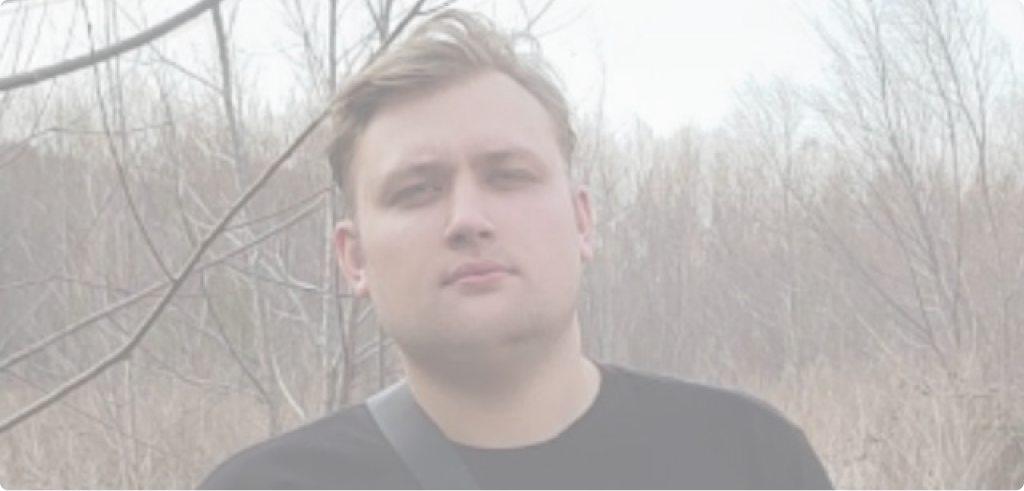
My bio includes a lot of experience
Software Engineer / Tech Lead 2024-Present. Architected and delivered a full-stack carsharing platform, taking primary technical ownership of the geospatial backend (Django, PostGIS), cross-platform mobile app (React Native), and real-time dashboard (Angular).
Software Engineer 2023-2024. Engineered high-performance REST APIs (FastAPI, Flask) and scalable database architectures (PostgreSQL, SQLAlchemy), alongside automated bot ecosystems for workflow optimization.
Research Engineer / Computational Specialist 2019-2023. Authored 5 peer-reviewed papers (including first-author in Scientific Reports), developing recurrent SNN frameworks to analyze dynamic mechanisms and neural computation principles.
Active skills
Bio timeline
2026 - 2026
Architected a scalable frontend infrastructure from scratch using React 19 and TypeScript (strict mode), enforcing Feature-Sliced Design and engineering a custom UI library of 50+ components with advanced React patterns like Compound Components and polymorphic generics. Championing a minimal-dependency philosophy, I adopted the React Compiler for automatic memoization, integrated LinguiJS for internationalization, and automated the design-to-code pipeline by syncing Figma tokens directly into the codebase. The final product is delivered as a fully responsive, offline-ready Progressive Web App (PWA), backed by a robust GitLab CI/CD pipeline featuring multi-stage Docker builds and a production-grade Nginx configuration.
Used technologies
2024 - 2026
I led the technical development of the ParCar platform across all stacks, moving from foundational backend architecture to full cross-platform leadership. On the server side, I built the core Django and PostgreSQL infrastructure featuring a strict state-machine for the trip lifecycle, PostGIS geospatial tracking, and a highly reliable billing engine using row-level locking. When the React Native mobile client struggled, I took over its development, resolving architectural flaws by adopting Feature-Sliced Design and enforcing strict OpenAPI contracts. I also engineered custom native libraries for Yandex Maps and image compression, which reduced media processing costs by up to 70%. To handle high loads and scale the platform, I optimized asynchronous workflows with a multi-priority Celery setup, RabbitMQ, and Valkey. Alongside the main application, I established a fully automated CI/CD staging environment and built a real-time Angular dashboard for system management.
Used technologies
2023 - 2024
Lately, I've been delving into web technologies and database work, focusing on developing search systems and implementing API services. I've utilized tools like FastAPI and Flask (including the flask_restx extension) within the company. While I previously engaged in data analysis, I've scaled back on that aspect in recent months. Additionally, I've been actively developing Telegram bots, primarily using the Python programming language. During this period, I've completed several projects related to developing search systems for existing products and fine-tuning them to meet user needs and experiences. Furthermore, I've launched the initial version of my portfolio website during this time.
Used technologies
2022 - 2023
After initial attempts to explore simple neural networks using dynamic mechanisms, I began actively investigating the potential of neural networks for a variety of tasks. The culmination of my work resulted in the article: "Multitask computation through dynamics in recurrent spiking neural networks." This article discusses an artificial neural network designed to perform a range of cognitive tasks, which are simplified versions of real biological experiments. Various analysis techniques were employed to study the dynamics of the process and understand the principles embedded within the trained network in order to "unpack" the black box that the network represents. For more detailed insights, the results can be examined in the article with DOI: 10.1038/s41598-023-31110-z.
Used technologies
2022 - 2022
In 2022, I contributed to the writing of a comprehensive review titled "Nonlinear dynamics and machine learning of recurrent spiking neural networks." This work explores the fundamental advancements in the development and analysis of recurrent spiking neural networks designed for modeling functional brain networks. It presents key terms and definitions used in machine learning and discusses primary approaches to the development and exploration of spiking and rate-based neural networks trained to perform specific cognitive functions. Additionally, it describes modern neuromorphic hardware systems that emulate brain information processing and delves into concepts of nonlinear dynamics, which enable the identification of mechanisms utilized by neural networks to accomplish target tasks.
Used technologies
2019 - 2020
In 2019, I delved into the realm of machine learning research for the first time. My inaugural contribution came in the form of the article "Dynamics of spiking map-based neural networks in problems of supervised learning" published in Communications in Nonlinear Science and Numerical Simulation in 2020, which encapsulated the findings of my investigation. The model implementation relied on the TensorFlow library primarily for offloading matrix computations to the GPU, as the task deviated from the standard usage of the library. The Force learning method was employed in this study. The aforementioned article elucidates the network dynamics during the training phase for generating periodic signals. It's worth noting that this work also served as my bachelor's thesis, encompassing additional exploration into the potential of training such a model to generate a chaotic attractor (specifically, the Lorenz attractor). Furthermore, within the scope of the thesis, the model was trained for generating periodic signals with controllable frequency.
Used technologies
2018 - 2019
During my undergraduate studies, I embarked on my first foray into scientific research. My initial project involved investigating the dynamics of a chain of bistable maps. I presented my work at the "Chaotic Spatiotemporal Dynamics of a Chain of Bistable Maps" conference, utilizing various visualization tools in the process. In tackling this task, I employed Python and C++ for computing the fractal dimensionality.
Used technologies
2017 - 2018
In the early stages of my career, I began exploring diffraction within the context of investigating the feasibility of applying diffraction theory to radar stations. My research focused on examining the potential use of signals reflected off rooftops for calibrating synthesized antennas on aerial vehicles. However, this topic eventually diverged from my interests, leading me to transition into the field of nonlinear dynamics.
Used technologies